Kabul, February 13, 2026 — In observance of International Radio Day 2026, the Afghanistan Journalists Center (AFJC) has issued a call for the immediate lifting of restrictions and increased support for the freedom of radio broadcasting across Afghanistan.
This year’s commemoration highlights a troubling escalation in restrictions on radio activities within the country. Over the past year, numerous radio stations have faced threats, closures, and censorship, while journalists working in radio have been summoned, detained, or imprisoned. These developments threaten the vital role radio plays as a primary source of information and a platform for community voices throughout Afghanistan.
Since UNESCO designated February 13 as International Radio Day in 2011, the day has served to honor radio broadcasters who deliver critical news, stories, and perspectives, fostering strong connections between media outlets and audiences worldwide. UNESCO emphasizes that radio remains a powerful tool for amplifying voices, sharing stories, and informing the public—especially as artificial intelligence (AI) begins to reshape the media landscape. When used ethically and responsibly, AI can support journalistic integrity, creativity, and public service, strengthening trust between broadcasters and listeners. However, technology alone cannot build trust—professional journalism does.
Despite rising internet and social media access, radio remains the most accessible and widely consumed media in Afghanistan. Yet, since the Taliban’s return to power in 2021, media freedom—particularly for radio broadcasters—has been severely undermined. While authorities have announced intentions to reform media laws, in practice, policies are often enacted through executive orders and directives that conflict with existing legal frameworks.
AFJC’s recent findings reveal that, over the past four years, authorities have issued at least 24 directives restricting media operations. These restrictions include bans on women’s participation in state media outlets such as the National Radio, segregation of work environments by gender, bans on female interviews with male colleagues and vice versa, dress code requirements, and limitations on women’s presence at press conferences and in the field. Additional measures prohibit broadcasting women’s voices in advertisements, public announcements, and phone communications in certain provinces. Such policies have significantly constrained media freedom and created a difficult environment for radio staff.
Journalists and station managers who defy these directives face threats, detention, or imprisonment. Some stations have been shut down or penalized for non-compliance. In the past year, two women-focused local radio stations received direct threats that jeopardized their operations, and two others were closed after content was deemed unacceptable by local authorities—leading to staff detention. Notably, one radio director was imprisoned for three months for reporting on social and economic issues. Reporters have also been detained for coverage during prayer times, sharing photographs of women, or issues related to appearance, such as facial hair.
Moreover, authorities have obstructed the renewal of radio licenses, particularly targeting stations managed or owned by women, often pressuring station owners to replace female managers with men. Meanwhile, advertising revenues—the primary funding source for many stations—have plummeted, and taxes on broadcasting activities have increased, further straining the media sector.
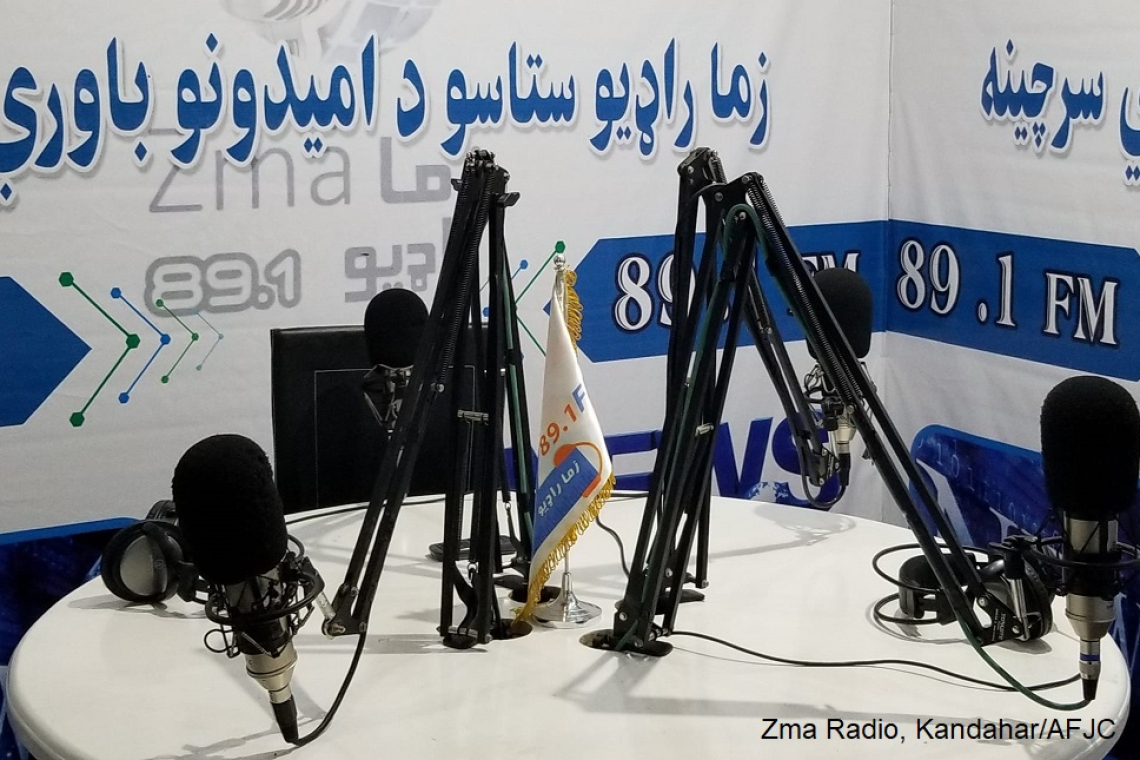
Currently, approximately 200 radio stations operate across Afghanistan, providing a diverse array of programming—whether around the clock, part-time, or for several hours daily.
On this International Radio Day, AFJC urges the de facto authorities to acknowledge the importance of free media, especially radio, and to respect existing legal protections for journalists and broadcasters. The organization calls for an immediate end to unlawful restrictions and interference, advocating for the restoration of media independence. Ensuring free, fair, and pluralistic radio broadcasting is essential to empowering the Afghan people and fostering an informed, resilient society.