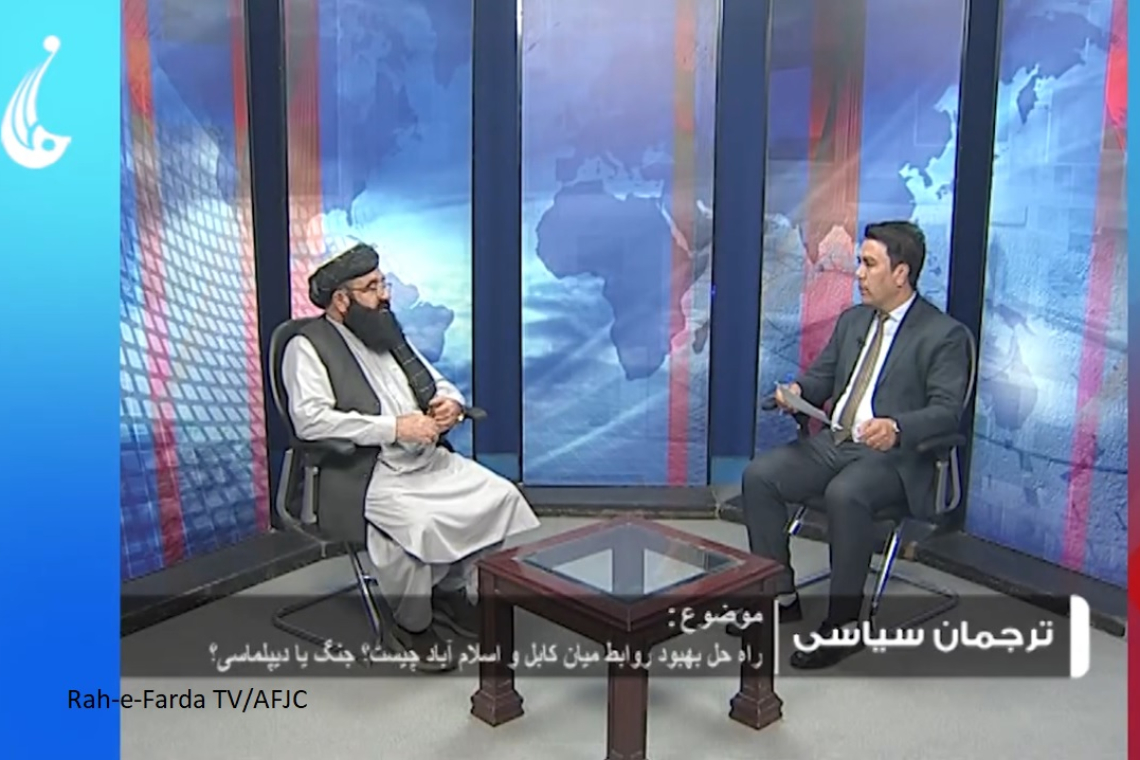
Rah-e-Farda TV, February 27, 2026
March 1, 2026
Kabul – The Afghanistan Journalists Center (AFJC) condemns the abrupt closure of Rah-e-Farda Television in Kabul and the seizure of its assets by the de facto authorities. This action appears to be retaliation for the station’s owner’s remarks, which criticized the de facto policy as the cause of Pakistan’s recent attacks on Afghanistan. The move raises serious concerns about the suppression of press freedom and the intimidation of independent media in Afghanistan.
Khubaib Ghufran, spokesperson for the de facto Ministry of Information and Culture, announced on February 28 via X (formerly Twitter) that Rah-e-Farda TV’s suspension and asset confiscation were justified because its owner, Mohammad Mohaqeq, allegedly justified Pakistani military attacks and condemned the de facto’s retaliatory strikes. The authorities accused Mohaqeq of inciting the enemy and threatening national unity, framing the station’s coverage as a threat to national security.
Sources in Kabul have indicated that the station was instructed to cease operations yesterday, marking at least the second suspension of Rah-e-Farda TV since April 2025, when its license was temporarily revoked amid reports of unpaid wages and threats to staff, before being reinstated after two months.
Rah-e-Farda TV was established in 2006 by Mohammad Mohaqeq, a prominent Afghan politician who has been in exile since the Taliban's return to power in 2021. Recently, Mohaqeq made comments criticizing the de facto authorities' policies regarding the Afghan-Pakistani conflict, accusing them of inciting violence and warning of potential regional destabilization.
This development follows the closure of Shamshad TV in September 2025, another private broadcaster that was shut down for allegedly failing to adhere to de facto-approved coverage of ongoing security clashes and Pakistan’s military actions. Although Shamsad TV was later permitted to resume operations after pledging compliance with the de facto authorities, these incidents underscore the mounting pressures faced by Afghan media outlets, especially those providing independent or critical coverage.
AFJC strongly condemns the de facto closure of Reh-e-Farda TV and the seizure of its assets. Such measures violate Afghanistan’s obligations under international human rights law to uphold freedom of expression and a free press.
We call on the de facto authorities to immediately cease their harassment and to allow Reh-e-Farda TV to reopen and restore its assets. Authorities must respect media independence, refrain from linking individuals’ personal statements to media outlets, and allow journalists and media outlets to operate freely without fear of reprisal.