February 14, 2025
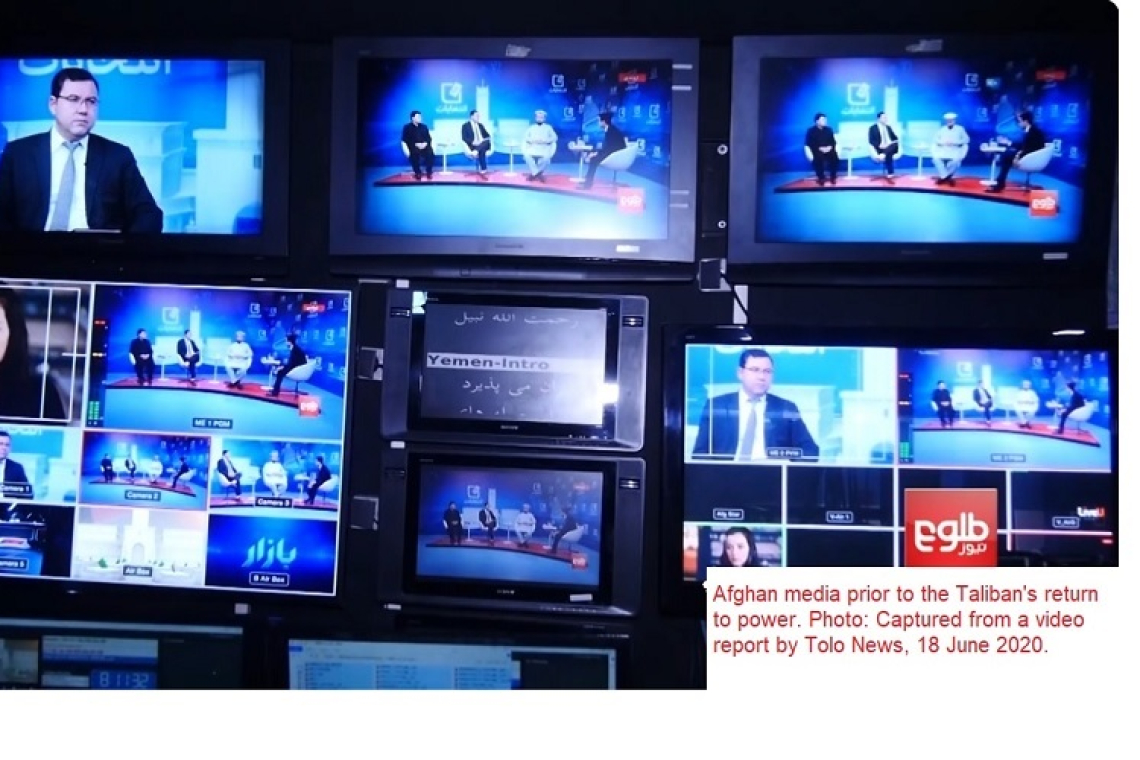
Kabul – The Afghanistan Journalists Center (AFJC) has voiced profound concern following an order from the de facto Ministry of Information and Culture prohibiting television stations in Kabul from airing any political or economic discussions. This directive mandates that media outlets may only engage with spokespeople from the ruling administration, a move the AFJC deems a blatant attempt to enforce a “one-voice policy” and suppress the few remaining critical voices in Afghanistan.
Sources within Kabul, speaking on the condition of anonymity due to safety concerns, revealed that during a meeting on February 12, officials from the de facto Ministry verbally cautioned television station representatives against broadcasting political content. Subsequent reports from television journalists confirm that this order extends to economic discussions challenging the Taliban government, effectively coercing private and independent stations into compliance. The television stations in Kabul were informed that, if necessary, they could only consult with Taliban spokespeople.
According to the AFJC sources, the de facto Ministry of Information and Culture has indicated that the specifics regarding the implementation of this directive will be determined by Monday, February 17.
As of now, there has been no official comment from the de facto Ministry regarding the nature of this order, including whether it is intended to be temporary or permanent. Since the Taliban assumed power on August 15, 2021, the de facto authorities have issued at least 23 media directives that have significantly curtailed press freedom in Afghanistan. The most recent set of directives, issued on September 21, 2024, included an eight-point order restricting live programs and mandating that media must only feature experts approved by the Ministry.
AFJC sources indicate that the authorities have expressed dissatisfaction with the implementation of previous orders, leading to the issuance of this new directive as an appendix.
AFJC strongly condemns this latest ban on political and economic discussions, viewing it as part of an ongoing strategy to stifle free media and diminish the representation of critical perspectives. AFJC calls upon the de facto authorities to revoke these extralegal measures that infringe upon the rights of media professionals. It urges the government to uphold the fundamental right to freedom of expression, which is not only a legal obligation but also a principle respected within the context of the Islamic teachings. Furthermore, AFJC insists that the media should be allowed to operate in accordance with the nation's media law, which the Ministry has previously declared to be in effect.