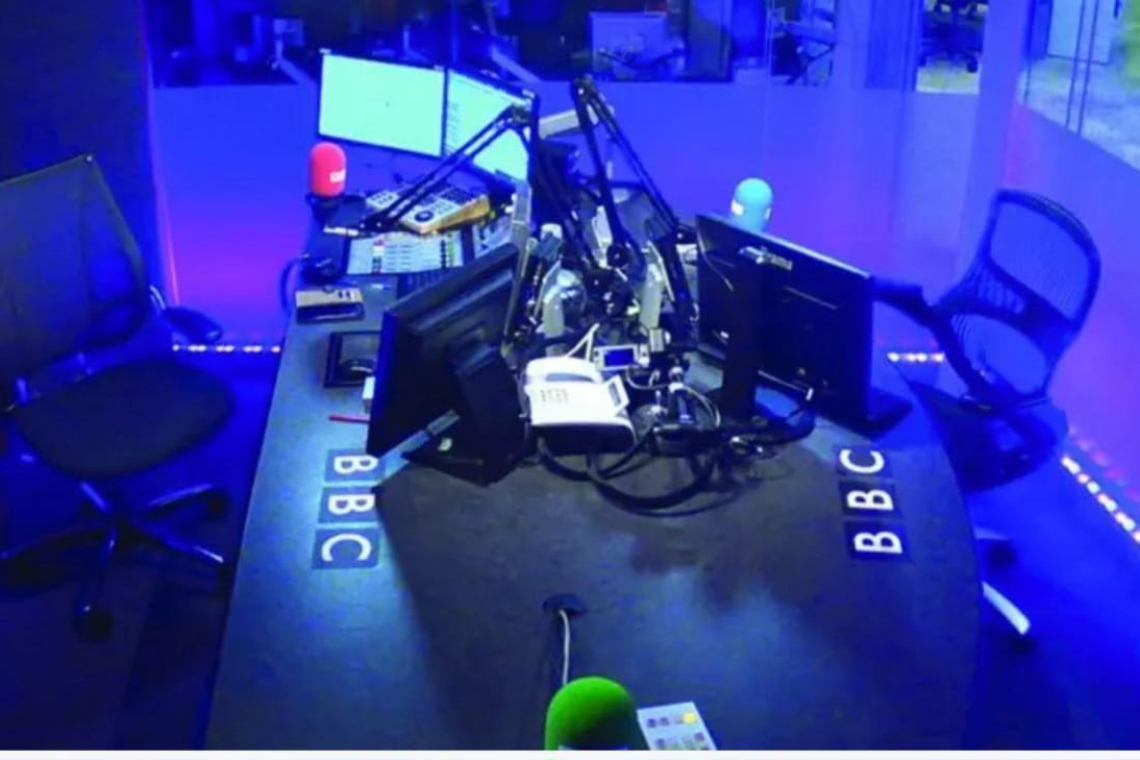
Kabul, October 19, 2026 — The Afghanistan Journalists Center (AFJC) on Monday called on the Taliban government to immediately reinstate BBC’s FM radio broadcasts, warning that a 10-day suspension is depriving millions of Afghans of access to independent news.
On October 10, the Taliban’s Ministry of Information and Culture ordered a halt to all BBC FM broadcasts in Farsi/Dari, Pashto, and English across Afghanistan, AFJC said. Three days later, the ministry said the suspension was due to “repeated violations” but did not specify the alleged offenses.
The BBC was the only international broadcaster on FM in Afghanistan, available in more than 30 provinces, cities and districts, including Kabul, Bamyan, Faizabad, Gardiz, Ghazni, Herat, Khost, Kunduz, Kunar, Lashkargah, Maimana,Mazar-e-Sharif, Pul-e-Khumri, Qalat, Sharena, Shiberqan, Taiqan, Trinkut, Aibak, Pul-e-Alam, Firuzkuh and Sar-e-Pul. The BBC said it continues to broadcast via shortwave, satellite, and online.
AFJC said its monitoring over the past 10 days found the FM ban has disproportionately affected audiences with limited or no internet access, including women and girls, farmers, and drivers in rural areas.
An informed source in Kabul told AFJC that Taliban de facto ministry of informatioin and culture officials were angered by BBC’s coverage of poverty, insecurity, social issues and women’s rights, its inclusion of guests critical of Taliban policies, insufficient coverage of what the Taliban describes as its achievements, and its use of the term “Taliban government” instead of “Islamic Emirate” or “Government of Afghanistan.”
This is not the first such action. In 2022, Taliban authorities suspended international television programming from the BBC, Voice of America, and Deutsche Welle that was carried by local Afghan partner stations.
“The Taliban has in practice suppressed free media and independent local voices while severely enforcing censorship. Suspending the BBC on FM makes access to credible information even more difficult and limited,” AFJC said.
AFJC calls on the de facto Ministry of Information and Culture to immediately lift the suspension and end its policy of suppressing independent voices, which undermines public debate and the vitality of Afghan society.