
July 29, 2026
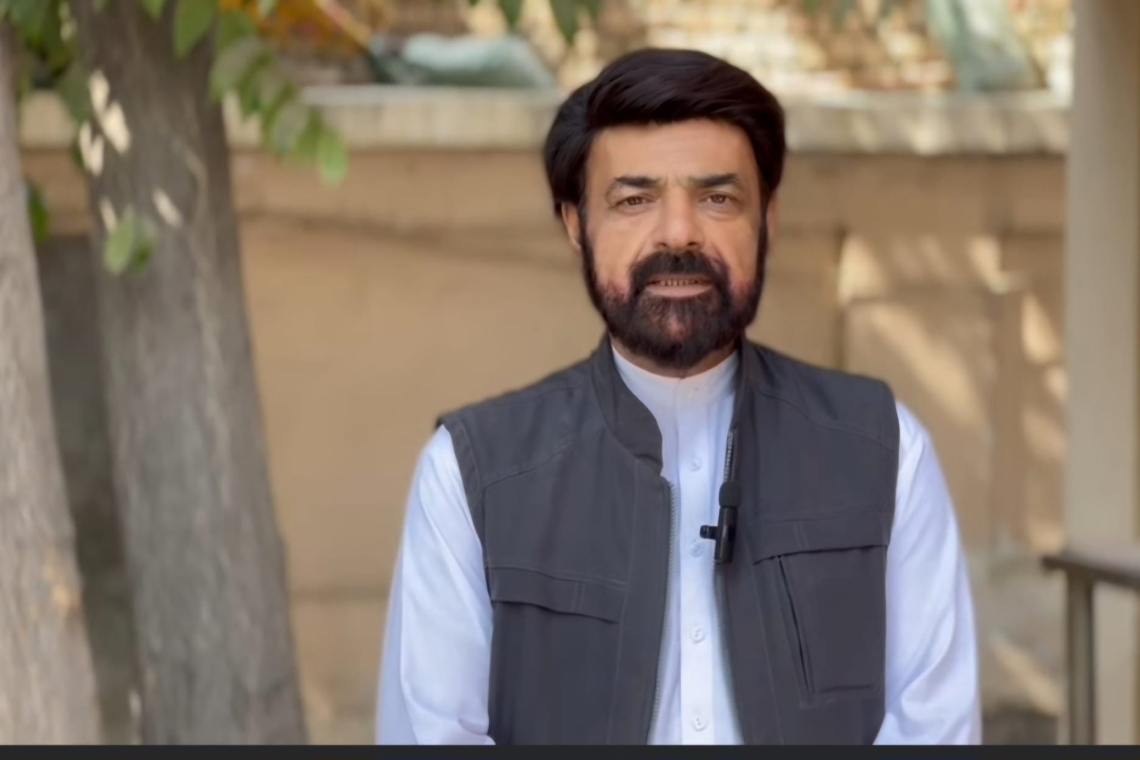
Kabul — The Afghanistan Journalists Center (AFJC) welcomes the release of esteemed journalist Bashir Hatif following more than a year of unlawful detention in Bagram Prison. While we celebrate his return to freedom, AFJC remains deeply concerned about the circumstances that led to his incarceration and the ongoing repression faced by journalists and media professionals across Afghanistan.
According to credible sources, Hatif was released from Bagram Prison in Parwan Province on July 23, 2026, and has since reunited with his family in Kabul. His detention was reportedly initiated by the de facto General Directorate of Intelligence (GDI) and members of the Morality Police (Ministry of the Promotion of Virtue and Prevention of Vice) in Kabul on July 23, 2025. He was subsequently sentenced by a GDI military court to one year in prison on charges of propaganda against the de facto Taliban authorities. Notably, Hatif’s imprisonment was carried out without access to legal counsel and prior to a fair trial, constituting serious violations of his fundamental rights.
Hatif is a respected veteran journalist and the founder of the “Center for Journalists’ Communication and Training”. He has long been an advocate for press freedom and media development in Afghanistan. Additionally, he has served on the governing board of “Afghanistan’s Journalists and Media Organizations Federation”. His detention, alongside that of journalists Shakib Ahmad Nazari of NTV Japan and Abuzar Sarem Sar-e-Puli of Tawana News Agency—who remain in custody on similar charges—highlights the ongoing crackdown on independent media and journalists under the current regime.
While we commend the authorities for Hatif’s release, AFJC reiterates its urgent call for the immediate and unconditional release of all journalists and media workers currently detained in Afghanistan. Our latest data indicates that at least two other journalists and one media activist remain in custody, facing charges such as propaganda against the de facto authorities, often linked to their journalistic activities.
AFJC condemns the use of military and intelligence courts to imprison journalists without due process, particularly on vague charges like “propaganda” that undermine fundamental freedoms. We call upon the de facto Taliban authorities to respect international standards on press freedom and human rights, cease arbitrary detention, and ensure journalists can operate without fear, intimidation, or censorship.
The right to independent journalism is essential for accountability, transparency, and the protection of human rights. AFJC urges the international community to intensify efforts to secure the immediate release of all detained media workers and to support initiatives aimed at restoring a safe and enabling environment for journalism in Afghanistan.