

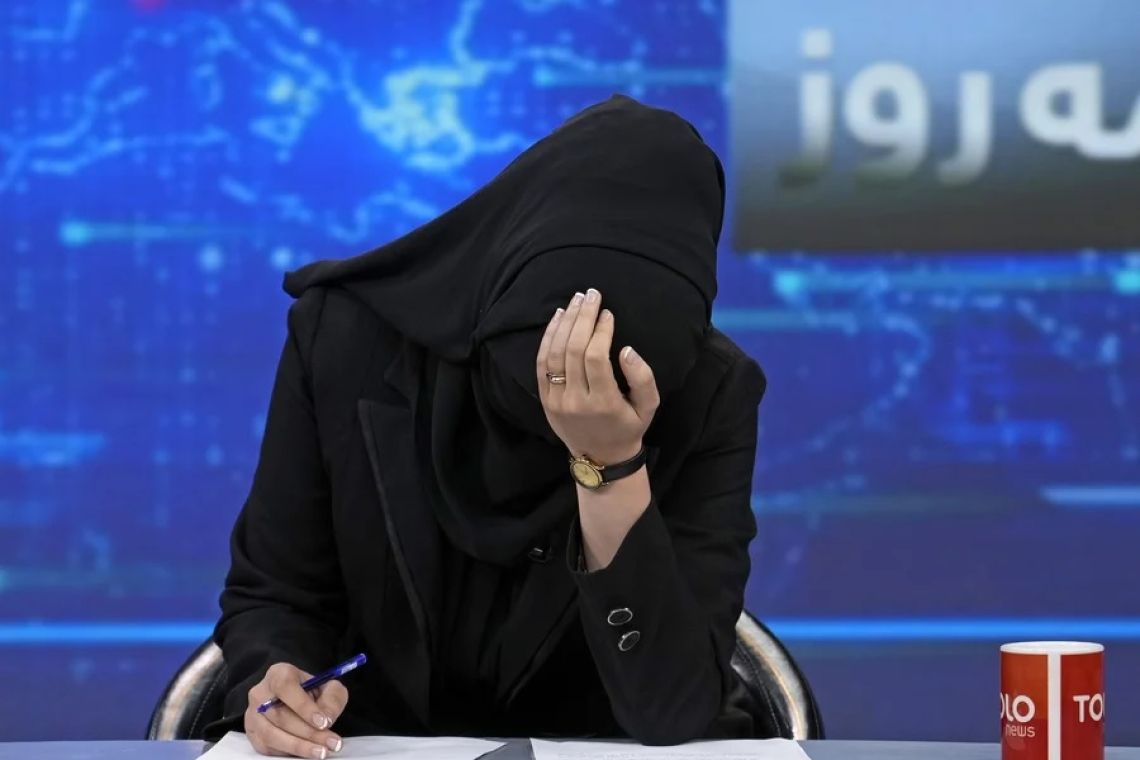
Photo: Ebrahim Noroozi/AP
November 2, 2025
Kabul – Over the past two decades, approximately 130 journalists and media workers in Afghanistan have tragically lost their lives due to war-related incidents and organized crimes. Despite these grave losses, a persistent culture of impunity has prevented justice from being served in the majority of these cases. Moreover, restrictions on media activities and journalism have reached unprecedented levels, severely impacting press freedom and the safety of journalists.
Today, November 2, 2025, marks the International Day to End Impunity for Crimes Against Journalists. According to the AFJC's data, since 2001, at least 130 journalists and media employees, including 20 women, have been killed in the country. Our investigations reveal that in over 90 percent of these cases, justice has not been upheld, perpetuating a dangerous cycle of violence and silence.
During the four years of Taliban defacto rule (from August 15, 2021, to August 15, 2025), AFJC has documented at least 640 violations of journalists’ and media workers’ rights. These include five deaths, notably two employees of the Radio and Television Afghanistan (RTA) who lost their lives in an incident attributed to Pakistani military attack, as well as more than 265 arrests. Such figures underscore the perilous environment in which journalists operate today.
The repression of media activities and journalism within Afghanistan has intensified under current restrictions. Additionally, de facto-led campaigns spreading disinformation against exiled journalists and media —amplified by digital platforms—continue to pose one of the most serious threats to press freedom and journalists’ safety. Major technology companies have largely remained silent or inactive, allowing their platforms to be exploited as tools of intimidation and shielding officials from accountability.
AFJC emphasizes that the ongoing culture of impunity, coupled with escalating threats, pressures, and restrictions, has detrimental consequences for Afghan society and the country’s development. Justice and accountability are essential to safeguarding the rights of journalists and ensuring a free, independent press.
AFJC calls on the de facto authorities to respect the fundamental rights of journalists and media outlets. Immediate action is needed to ensure justice for victims of crimes against journalists and media workers. Furthermore, we urge the de facto authorities to revoke directives that have unlawfully and unprecedentedly restricted media freedom, allowing journalists to operate freely, report accurately, and exercise their right to speak the truth without fear of repression or censorship.