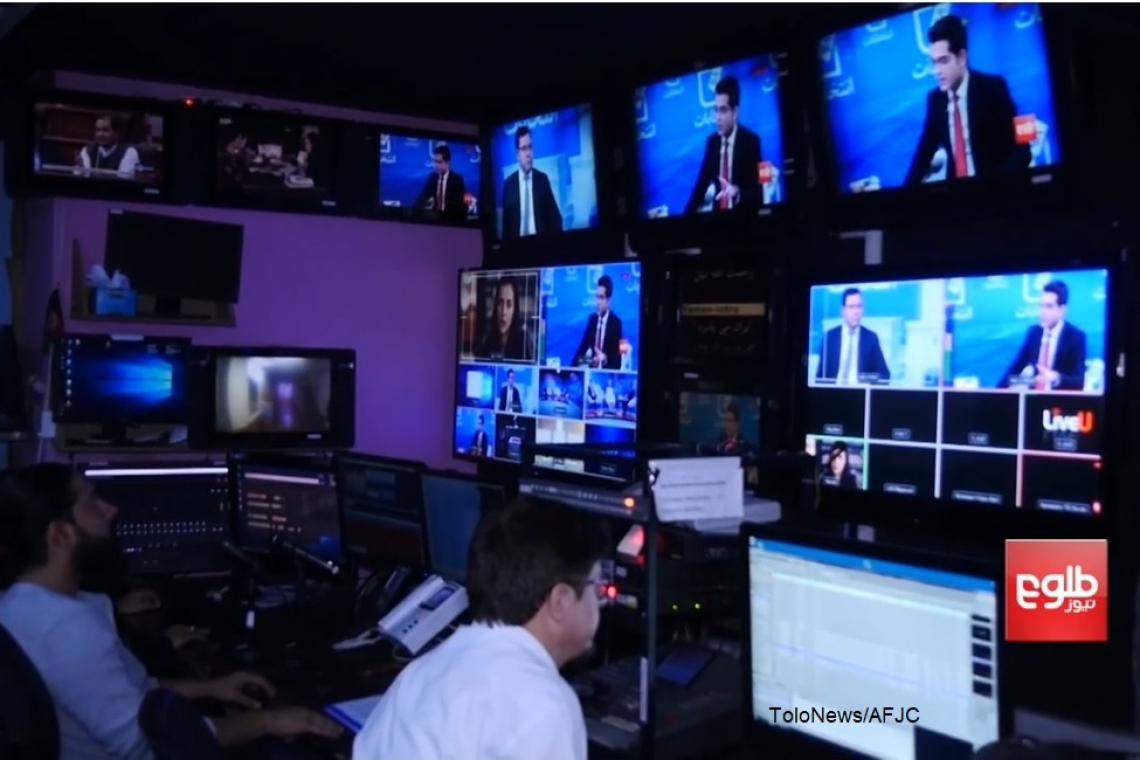
ToloNews, June 18, 2020
Kabul, September 28, 2026 — On the International Day for Universal Access to Information, the Afghanistan Journalists Center (AFJC) warns that the right to access information in Afghanistan has been systematically restricted by the de facto Taliban government.
The United Nations Educational, Scientific and Cultural Organization [UNESCO] proclaimed September 28 as the International Day for Universal Access to Information in 2015 to promote both the legal guarantee of this right and practical access for all citizens. Under Taliban rule, Afghanistan has moved decisively in the opposite direction.
Since returning to power in August 2021, the Taliban have issued at least 24 restrictive directives curtailing freedom of expression and media work, according to AFJC documentation. All contravene Afghanistan’s Mass Media Law, its Access to Information Law, and international norms.
“The people of Afghanistan today live in absolute information darkness, not because of war but because of a deliberate, official policy,” AFJC said. “The Taliban have declared war on the right to know — a war that has silenced journalists, severely restricted information of public interest, and stripped the public of its fundamental right to be informed.”
From Censorship to Criminalization
AFJC finds that restrictions have intensified systematically since the enforcement of the Taliban’s Law on the Promotion of Virtue and Prevention of Vice. Among the most concerning developments documented in the past year:
- Ban on covering dissent: A blanket prohibition on media coverage of protests, demonstrations, and dissenting voices.
- Prior restraint: Imposition of pre-publication content control and mandatory approval.
- Transnational censorship: Bans on broadcasting or rebroadcasting programs of international television networks.
- Erasing women from the media: Banning female journalists from state media and expanding work restrictions on women in private and independent outlets.
- War on images: Extension of the ban on publishing images of living beings to 25 provinces, forcing the closure of dozens of television stations.
- Communication blackout: Ban on smartphone use for civil servants, extended to employees of state-run media including RTA and Bakhtar News Agency in several provinces, alongside restrictions on fiber-optic internet aimed at curtailing public access.
- Criminalization of journalism: Arrest, threats, and prosecution of journalists for independent reporting or for contact with exiled Afghan media.
AFJC has documented numerous cases in which journalists were detained, harassed, or barred from reporting for seeking or publishing information in the public interest. In several instances, mere contact with exiled media resulted in threats or imprisonment.
AFJC Calls for Immediate Action
On the occasion of the International Day for Universal Access to Information, the Afghanistan Journalists Center calls on the Taliban to:
- Immediately revoke all extrajudicial decrees and directives that violate the Mass Media Law and the Access to Information Law.
- End the pervasive system of censorship, security surveillance of newsrooms, and the arrest and intimidation of journalists.
- Lift all restrictions on internet access, including curbs on fiber-optic services.
AFJC also calls on the international community, the United Nations, and press freedom organizations to provide urgent, practical support to independent media and journalists at risk inside Afghanistan.
Access to information is not a privilege. It is a right — and the cornerstone of accountability. Afghans deserve to live in a country where facts are not banned and journalists are not silenced.