

May 21, 2026
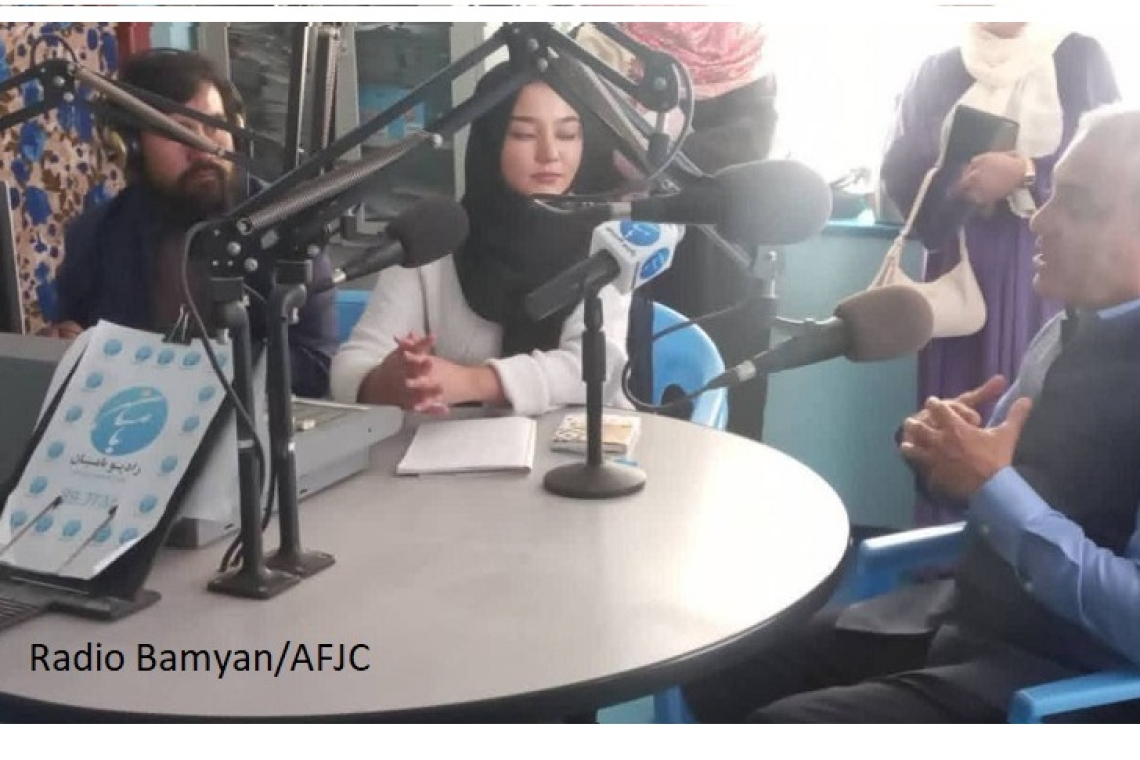
Bamyan — The Afghanistan Journalists Center (AFJC) strongly condemns the recent actions of the de facto’ intelligence officials in Bamyan province, who ordered the shutdown of Bamyan Radio, a longstanding independent media outlet. This decision constitutes a serious violation of press freedom and access to information. AFJC calls for an immediate review of this action and the unconditional reopening of Bamyan Radio.
A local source, who requested anonymity due to safety concerns, reported that on May 17, members of the provincial department of the de facto General Directorate of Intelligence (GDI) shut down Bamyan Radio, which had been operating since 2003. The source indicated that the station was closed without prior notice and without due process.
Additionally, a de facto official in Bamyan claimed that the station was closed due to the expiration of its operational license. However, a local source said that the station’s representatives had submitted multiple renewal applications, which were denied by the authorities. No official notice or documented legal process has been provided to justify the closure.
Bamyan Radio, broadcasting on 89.7 FM, has historically served the community by providing diverse programming on political, social, health, educational, and religious issues. Since the Taliban’s return to power in 2021, the station’s operations have been increasingly restricted, reflecting the broader deteriorating media environment under de facto rule.
With the closure of Bamyan Radio, only one private station, Nasim, remains operational in the province, significantly reducing local media pluralism and public access to independent information.
AFJC urges the de facto authorities to immediately reverse the closure of Bamyan Radio, renew its license without further delay, and permit the station to resume operations unconditionally. We also call on authorities to ensure that staff members can operate freely and that their rights to freedom of expression and access to information are upheld.
This incident underscores a broader pattern of increasing censorship, intimidation, and suppression of media in Afghanistan, with at least 207 documented violations of journalists’ rights between March 2025 and March 2026. These include the closure of 21 local television stations due to bans on broadcasting images of living beings, the forced shutdown of eight media outlets and journalism organizations, and the revocation of over ten media licenses for non-compliance with media policies imposed by the de facto authorities.