

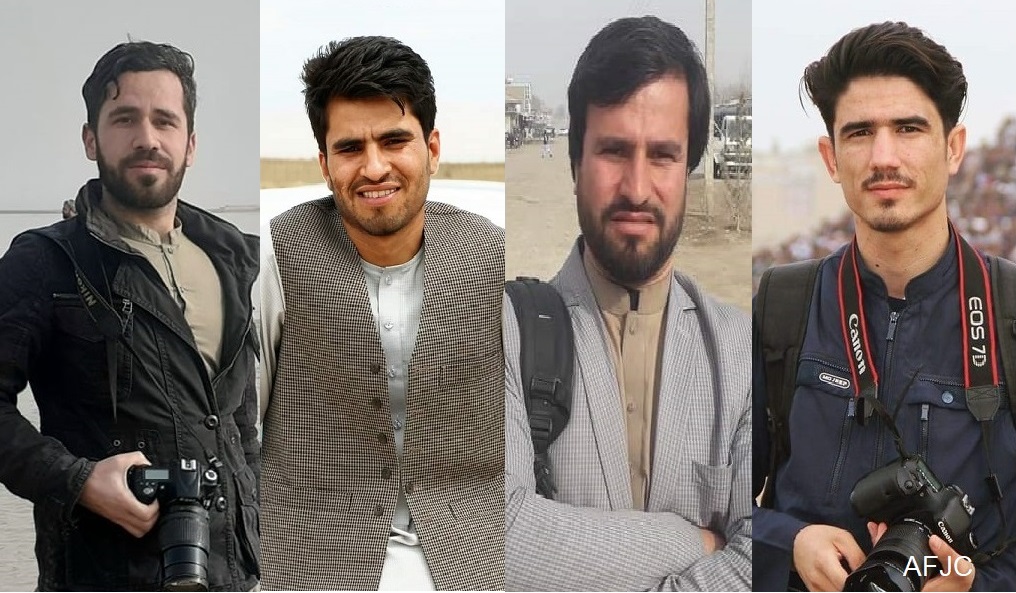
From right: freelance reporter Obaidullah Ahmadi, Rah-e-Farda Radio and TV reporter Islamuddin Sahibzada, TOLOnews reporter Emil Kakar, and Killid Radio reporter Atiqullah Rahimi were arrested by the intelligence department in Kunduz province on Sunday, March 25, 2024.
March 25, 2024
Kunduz, Kunduz Province - Three out of four journalists who were arrested by the Intelligence Department in Northeastern Kunduz province yesterday have been released. However, a freelance journalist remains in custody. The Afghanistan Journalists Center (AFJC) is urging for his immediate and unconditional release, and is calling on the Taliban General Directorate of Intelligence (GDI) to respect media laws and cease the suppression of journalists and free media.
According to local journalists who preferred not to be named for safety reasons, Ahmadi was arrested along with Pajhwok Afghan News reporter Aimal Kakar, Killid Radio reporter Atiqullah Rahimi, and Rah-e-Farda Radio and Television reporter Islamuddin Sahibzada while they were covering an event at the Kunduz Municipality Hotel. They were detained and questioned by intelligence officers, who also seized their smartphones for inspection. While Kakar, Rahimi, and Sahibzada were released after three hours, Obaidullah Ahmadi remains in custody.
Ahmadi's arrest is believed to be linked to his involvement in a report about a damaged bridge in Aliabad district, which was aired by the Afghan media outlets in exile. Local journalists have reportedly been warned by Taliban officials in Kunduz province not to engage with exiled Afghan media outlets, as they view them as propagandistic against the Taliban.
AFJC is expressing deep concern over the journalists' arrests in Kunduz province and is demanding Obaidullah Ahmadi's immediate release. AFJC is also calling on the Taliban General Directorate of Intelligence (GDI) to halt the arbitrary arrests of journalists, as it creates a chilling effect on the media landscape and encourages self-censorship. Journalists should be permitted to operate freely in compliance with Afghanistan's media law.
According to AFJC's findings, at least 59 journalists have been detained by the GDI and the ministry of Virtue and Vice of Taliban in the past 12 months. The recent arrests in Kunduz contribute to this troubling pattern.