

November 23, 2025
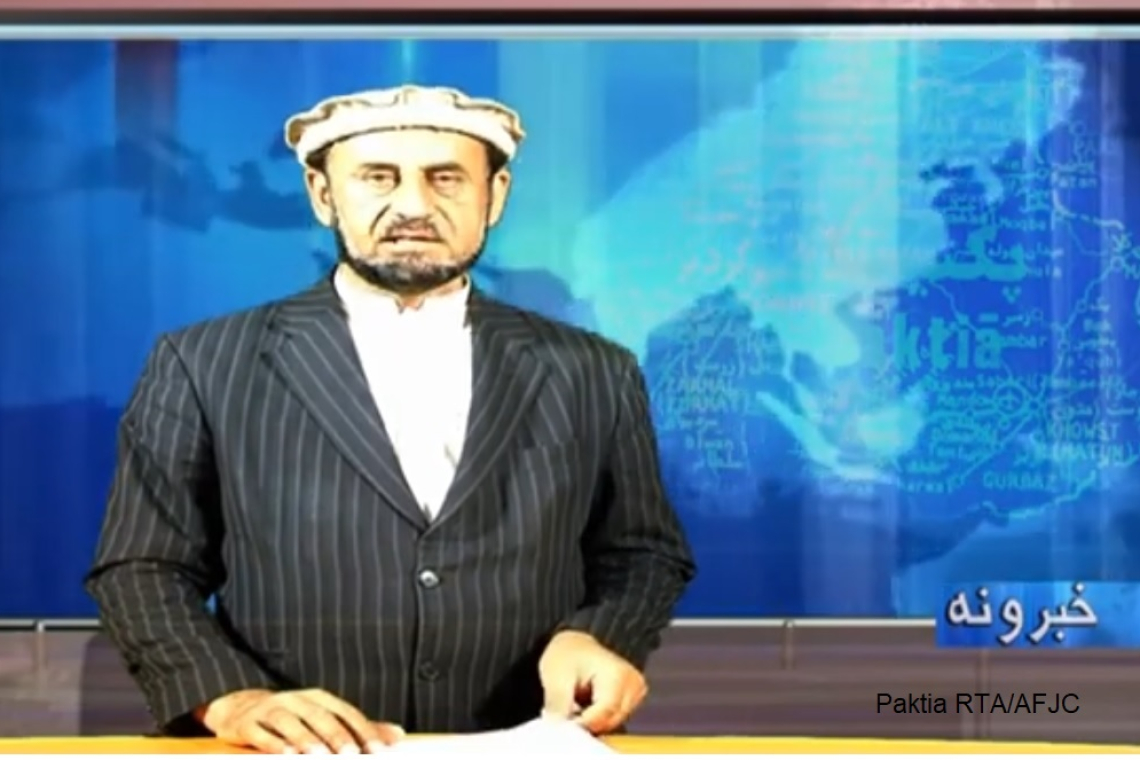
The Afghanistan Journalists Center (AFJC) condemns the recent decision by the de facto authorities in Paktia Province to prohibit the publication of images of living beings and to restrict video interviews. This ban has led to the closure of the provincial branch of the national television station and has adversely impacted visual content production for local radio broadcasts. These measures exemplify ongoing efforts to suppress independent journalism and restrict public access to information.
A local journalist in Paktia, who requested anonymity for safety reasons, reported on November 23, that the de facto Directorate of Information and Culture, in coordination with the provincial governor’s office, issued an order to halt the operations of the provincial branch of National Television (RTA). Consequently, the station has transitioned to a radio-only format.
The journalist explained that this directive was issued following pressure from the Promotion of Virtue and Prevention of Vice Department, which prohibits the publication of images of living beings. Furthermore, de facto provincial officials have been instructed to avoid conducting video interviews, instead delivering reports in audio or written form.
The ban has also impacted other media outlets, including the provincial branch of the state-owned news agency, Bakhtar, as well as local radio stations such as Nan, Zhowand, Hawa, Patan Ghag, and Samkani Ghag.
This ban is part of a broader pattern of restrictions that have already been implemented across 22 of Afghanistan’s 34 provinces since the adoption of the Promotion of Virtue and Prevention of Vice Law in August 2024. During this period, numerous media outlets have been shuttered or transformed into radio stations, significantly curtailing independent journalism.
These restrictions not only impede journalists’ ability to report accurately and safely but also deprive the public of vital information during a critical time when access to independent news is more essential than ever.
AFJC calls on the de facto authorities to immediately lift this ban, uphold media freedoms, and ensure that journalists can operate without fear of censorship or repression.
We also urge the international community to press for the protection of press freedom in Afghanistan. Respect for a free press is fundamental to accountability and democratic development; restricting it only deepens cycles of repression and misinformation.