

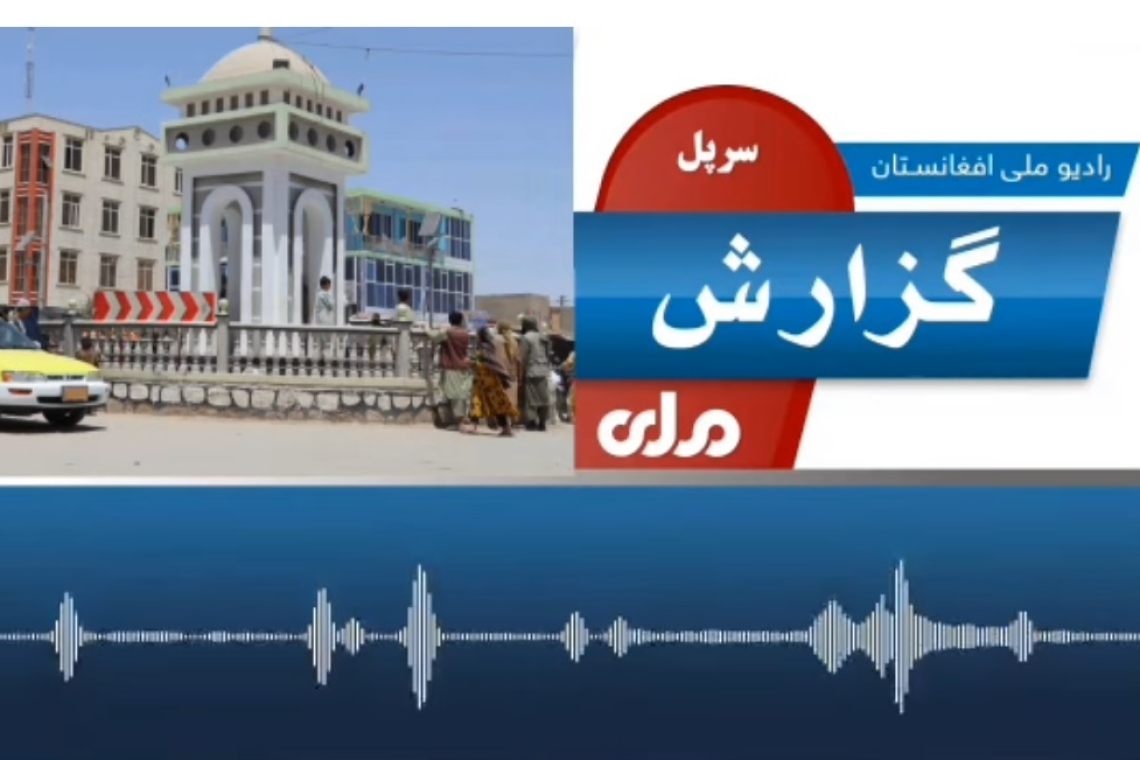
The Sar-e-Pul branch of National Television (RTA) has been converted into a radio station after a ban on publishing images of living beings.
July 20, 2025
Sar-e-Pul, Sar-e-Pul Province – The de facto authorities in Sar-e-Pul province have officially enacted a ban on the publication of images of living beings within the province. This development raises the total number of provinces affected by this restriction to 20 across Afghanistan. The Afghanistan Journalists Center (AFJC) has expressed serious concern over the expansion of this ban, highlighting its potential to severely impact media operations and restrict public access to information.
In a statement, the de facto provincial branch of Bakhtar News Agency in Sar-e-Pul reported that a meeting held on July 13, 2025, involved local officials and representatives of media outlets to discuss the implementation of the Promotion of Virtue and Prevention of Vice law.
During the meeting, Khairullah Khairkhah, a representative of the de facto Promotion of Virtue and Prevention of Vice department, stated that in accordance with the law, the publication of images of living beings is prohibited throughout Sar-e-Pul province and its media outlets.
A local journalist, who requested anonymity citing safety concerns, confirmed to AFJC that local media outlets had been verbally instructed by authorities to enforce this directive. He also noted that the provincial branch of the National Television (RTA), which previously produced local reports and rebroadcast programs from Kabul’s National Television, has now been converted into a radio station.
Currently, in addition to national radio and television, provincial branches of Bakhtar News Agency and a monthly magazine operated by the de facto Ministry of Information and Culture, three private radio stations—Saday-e Sar-e-Pul, Bano, and Anbeer—are active in the province and have been affected by this directive.
Since the law on the Promotion of Virtue and Prevention of Vice was enacted in August 2024, the ban has already been implemented in 19 of Afghanistan’s 34 provinces, including Kandahar, Takhar, Badghis, Helmand, Nangarhar, Nuristan, Farah, Badakhshan, Baghlan, Nimroz, Jowzjan, Zabul, Parwan, Kunduz, Bamyan, Daykundi, Faryab, Panjshir, and Laghman.
AFJC considers the enforcement of this ban in Sar-e-Pul and the efforts to extend it across other provinces as a violation of fundamental principles of free expression and independent media. Such measures threaten to further restrict media freedom and public access to information—already severely limited.
We urge the de facto authorities to reconsider and revoke this restrictive order and other directives that conflict with Afghanistan’s media laws.