

July 11, 2025
Kabul— The Afghanistan Journalists Center (AFJC) today announced that it has documented at least 140 incidents of media freedom violations across Afghanistan during the first six months of 2025, representing approximately a 56% increase compared to the same period in 2024.
According to AFJC’s Press Freedom Tracker, the escalation highlights intensified restrictions and pressures imposed by de facto authorities. The majority of violations include threats, intimidation, harassment of journalists, and clampdowns on media outlets. Notably, there has been a crackdown on visual reporting, particularly television broadcasting, under the Promotion of Virtue and Prevention of Vice law, which bans the broadcasting of images of living beings. This regulation, initially enforced in Kandahar, Takhar, Badghis, Helmand, and Nangarhar in 2024, has expanded to 14 additional regions, including Nuristan, Farah, Badakhshan, Baghlan, Nimroz, Jowzjan, Zabul, Parwan, Kunduz, Bamyan, Faryab, Daykundi, Panjshir, and Laghman.
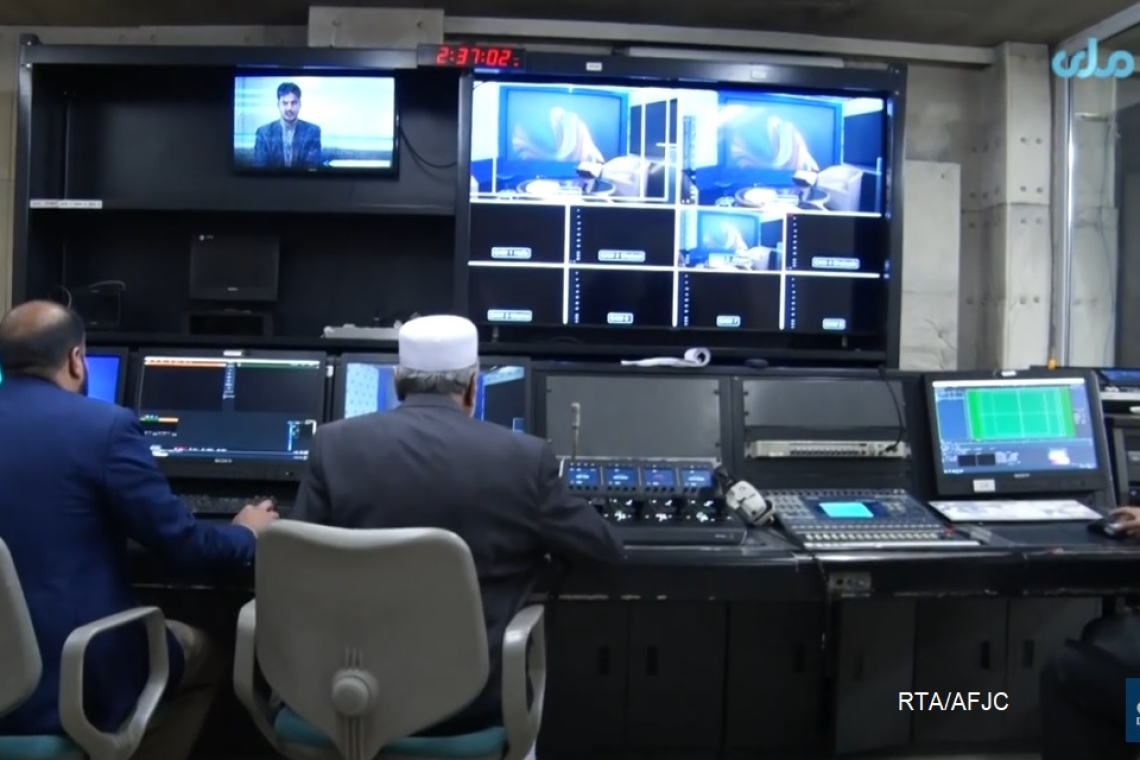
During this period, at least 26 media outlets—including 23 local television stations—were forced to cease operations. Of these, only three resumed broadcasting after some time, albeit with limited visual reports; others have shut down entirely or shifted to radio. Many outlets have shut down completely or transitioned to radio broadcasting due to ongoing restrictions. Additionally, two private radio stations and one television station were temporarily shut down by intelligence services on allegations of collaboration with exiled media entities. The radio stations were permitted to resume activities after approximately 40 days under strict conditions emphasizing adherence to government policies and self-censorship.
Among the most significant violations against journalists in the past six months are the detention of at least 20 journalists, most accused of propaganda against the de facto authorities through collaboration with external media. These detentions ranged from a few hours to several days or months. Fourteen of the detainees were released after pledging to comply with the regime’s media policies—policies that contradict national media laws and disregard fundamental media and journalist freedoms. Currently, six journalists remain incarcerated in Pul-e-Charkhi prison in Kabul and Bagram prison in Parwan province, serving sentences ranging from six months to one year. Additionally, three other journalists detained in Kabul and Ghazni last year are currently serving prison sentences.
AFJC’s findings also show that pressures on women working in media have significantly increased in the first half of 2025. The few media outlets managed by women faced direct and indirect pressure from authorities, including threats to cease operations or obstructions during license renewals.
In March, de facto provincial authorities in Kandahar—where Taliban leader Hibatullah Akhundzada has ruled the country since reclaiming power in 2021 and strictly enforcing Sharia law—announced a ban on women’s voices in local media. This policy has since been adopted more broadly, justified through references to the Promotion of Virtue and Prevention of Vice law, which restricts women’s voices, promotes gender segregation, and limits women’s participation in public discourse.
Private media face additional challenges, including cuts or suspension of internationally funded programming, leading to layoffs and closures. Meanwhile, major media outlets based in Kabul report increasing restrictions on political and economic coverage, with the Ministry of Information and Culture banning reporting on these topics—part of a broader pattern of suppressing independent journalism and consolidating regime-controlled narratives.
AFJC condemns these ongoing repression efforts, which threaten the fundamental rights of journalists and the free flow of information. The organization calls on the Taliban de facto authorities to uphold their obligations under international and national media laws to protect journalists’ rights and freedoms. It further urges the international community, media rights organizations, and stakeholders to intensify advocacy efforts aimed at restoring press freedom, supporting independent journalism, and opposing the silencing of dissenting voices.