

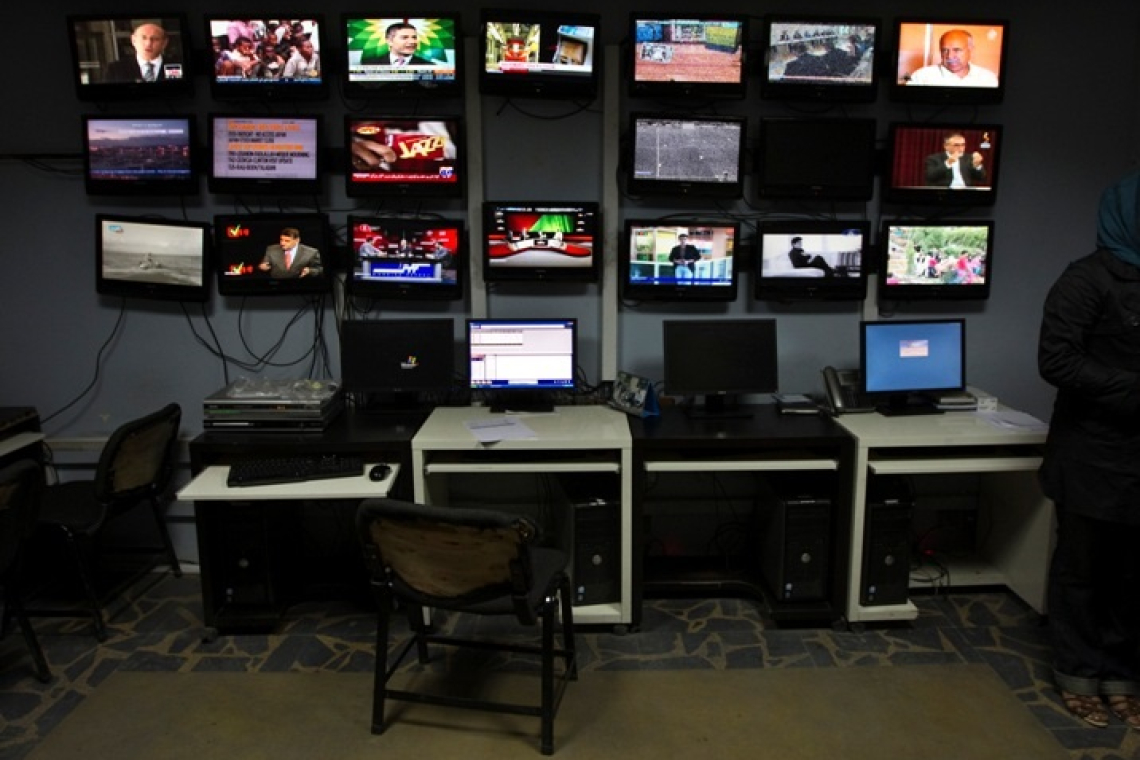
Photo: Ahmad Masood, REUTERS
November 13, 2024
Jalalabad, Nangarhar Province – The Taliban's ongoing crackdown on media freedom in Afghanistan has intensified, as authorities in Nangarhar province have officially banned local officials from taking photographs and conducting video interviews with media outlets. This ban marks a disturbing trend, with Nangarhar becoming the fifth province to impose such restrictions. The Afghanistan Journalists Center (AFJC) has expressed deep concern regarding the implications of this order, which threatens to undermine media operations and public access to vital information.
A local journalist and director of a media outlet, who requested anonymity for safety reasons, revealed that the order was issued by Taliban Deputy Governor Molla Azizullah Mostafa, addressing local and district officials. This information was communicated by Quraishi Badloon, the director of the Department of Information and Culture of Nangarhar province, via a joint WhatsApp group for local officials and media representatives on November 12. The order, reviewed by the AFJC, states that in accordance with a recent vice and virtue law approved by Taliban Supreme Leader Hibatullah Akhundzada, the provincial military council has determined that officials are henceforth prohibited from taking and broadcasting photographs of living beings.
Mostafa emphasized that all communications from Taliban officials in the province must be delivered exclusively in written form, allowing only images of government buildings, signs, or logos. Additionally, he directed that any media interviews with local officials must be conducted solely in audio format if requested.
This ban follows similar restrictions already in effect in Kandahar, Takhar, Badghis, and Helmand provinces, which have resulted in the closure of both state and private television stations, as well as further limitations on local officials and journalists.
Article 17 of the vice and virtue law, ratified in August by the Taliban Supreme Leader, explicitly mandates the prevention of the publication of images featuring living beings.
AFJC is alarmed by the implementation of this ban in Nangarhar, viewing it as a regressive measure that severely impairs the media’s ability to report on local governance, undermines transparency, and stifles public discourse. This situation threatens journalistic freedom and access to information. The spread of such restrictions to other provinces indicates a troubling deterioration in media freedom and an escalation of suppression tactics.
We urgently call on the Taliban authorities to reconsider this ban on the publication of images of living beings. We demand the revocation of this directive and the lifting of other media restrictions imposed over the past three years. It is crucial that media outlets operate freely and that journalists can perform their duties without fear, in accordance with international standards of press freedom.