

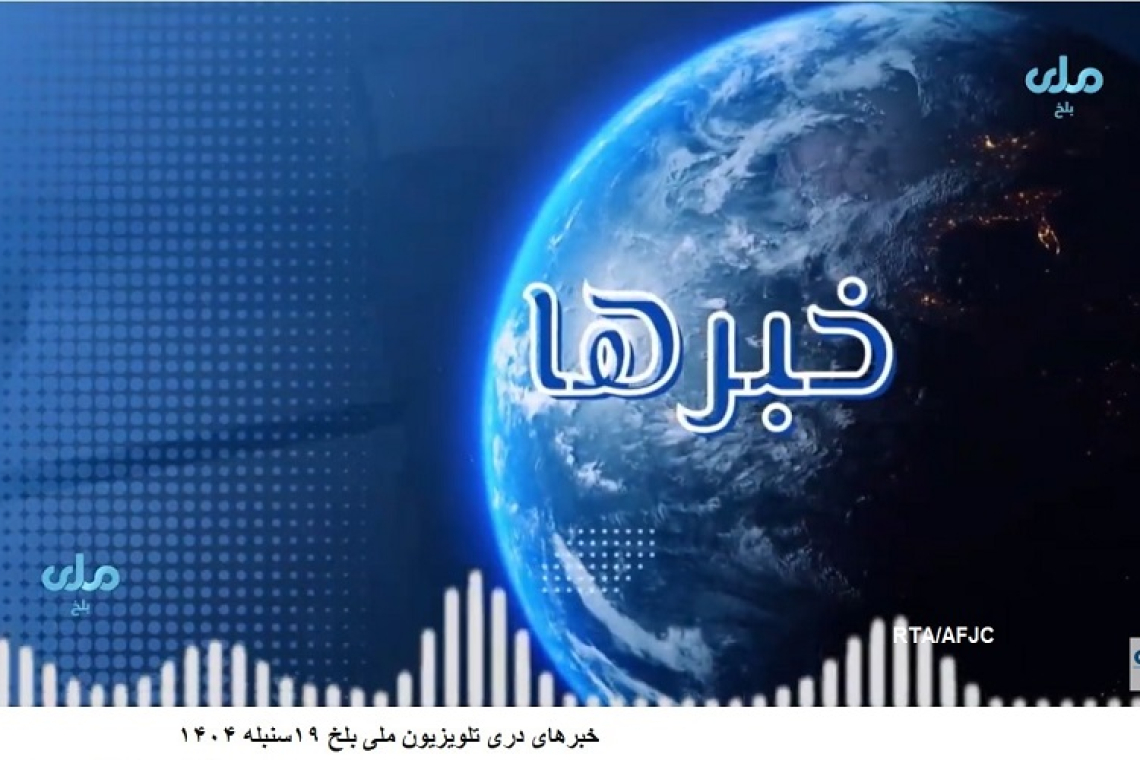
The “National TV” in Balkh has ceased broadcasting and shifted to radio-only service following ban on publishing images of living beings.
September 12, 2025
Mazar-e-Sharif, Balkh Province — The de facto authorities in northern Balkh province have officially imposed a ban on local officials taking photographs and conducting video interviews with media outlets. As a result of this order, the provincial branch of the state-run “National TV” has ceased broadcasting, transitioning to radio-only mode. This development marks a troubling expansion of restrictions, with Balkh becoming the 21st province to enforce such measures.
A local journalist from Balkh, who requested anonymity for safety reasons, reported that on September 9, de facto Governor Yusuf Wafa held a meeting with local officials, including Mullah Mohammad Mohammadi, director of the provincial department of National Radio Television Afghanistan (RTA). During the meeting, the governor discussed the implementation of the Promotion of Virtue and Prevention of Vice law. According to this source, the governor stated that, in accordance with the law, the publication of images of living beings is prohibited, and local officials are barred from taking photographs or conducting video interviews with media outlets.
Furthermore, a journalist in Mazar-e-Sharif, the provincial capital, reported that following the order, “National TV” in Balkh has ceased broadcasting and shifted to radio-only service. He said local media outlets have faced mounting pressure over recent months. Independent journalists have been barred from attending local programs and press conferences.
A local source in Balkh indicated that some de facto officials, including the head of the provincial court, recently traveled to Kandahar to meet with the de facto leader Mullah Hebatullah Akhunzada. Following their return, they emphasized that, under Article 17 of the Promotion of Virtue and Prevention of Vice law, the local administration must prevent the broadcasting of live images of living beings.
Currently, besides the state-run radio, five other media outlets operate in Balkh: Arzo Radio and Television, Safir Television, Shahraara Television, Rabea Balkhi Radio, and Police Radio.
Since the enactment of the Promotion of Virtue and Prevention of Vice law in August 2024, similar bans have already been implemented in 20 of Afghanistan’s 34 provinces, including Kandahar, Takhar, Badghis, Helmand, Nangarhar, Nuristan, Farah, Badakhshan, Baghlan, Nimroz, Jowzjan, Zabul, Parwan, Kunduz, Bamyan, Daykundi, Faryab, Panjshir, Laghman, and Sar-e-Pul.
AFJC condemns the ban on broadcasting images of living beings in Balkh, which has led to the closure of “National TV,” as a violation of fundamental freedoms of expression and independent media. We warn of the detrimental consequences this trend poses to media operations, journalist safety, and the public’s right to access information—already severely limited under current restrictions.
We call on the de facto authorities to reconsider and revoke this restrictive order and any other directives that conflict with Afghanistan’s media laws. Upholding media freedom is essential for fostering transparency, accountability, and the public’s right to information.