

May 24, 2026
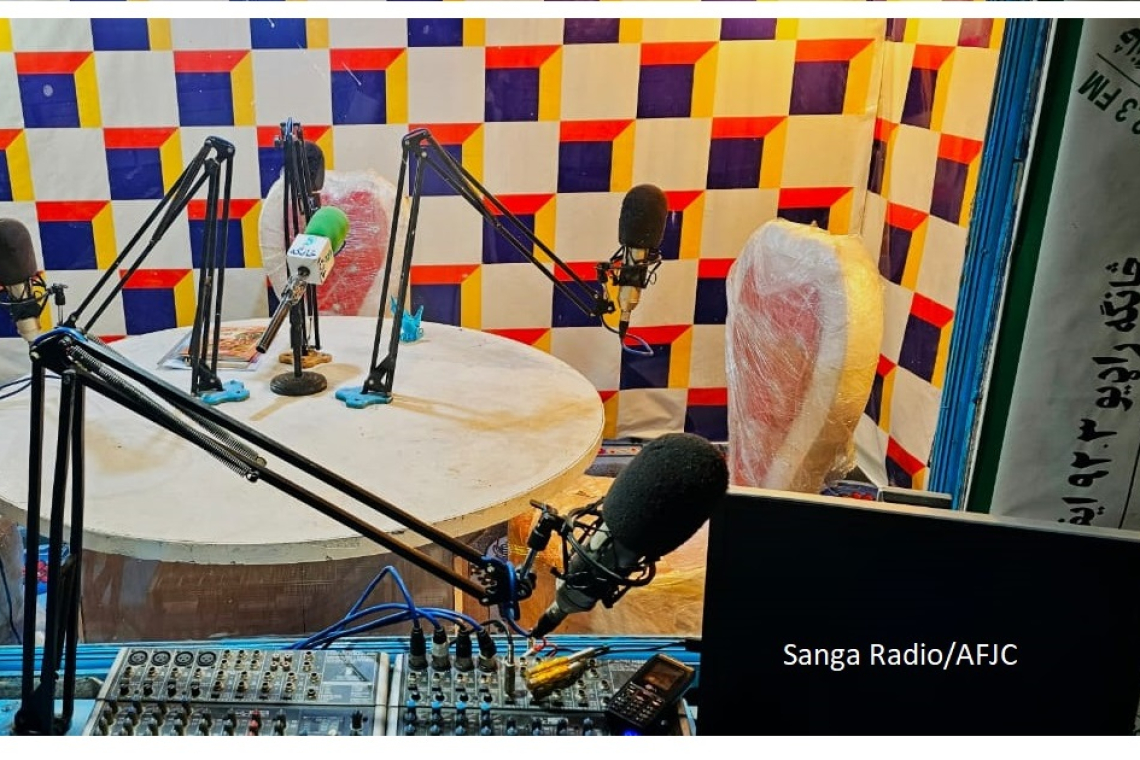
Kandahar — The Afghanistan Journalists Center (AFJC) strongly condemns the recent actions by the de facto authorities in Kandahar, which led to the closure of three local radio stations—"Tahsin al-Qur'an," "Sanga," and "Zama Zeewar." These closures, justified by allegations of unpaid taxes and substandard broadcasts, represent yet another step in the ongoing suppression of media freedom in Afghanistan.
The de facto department of Information and Culture of Kandahar province announced via X on May 24, that three radio stations were shut down due to lack of official permits, longstanding unpaid taxes, and subpar broadcasting standards. The department also issued warnings to two other stations, "Millat Zagh" and "Wranga," instructing them to complete necessary licensing procedures within a specified timeframe. Furthermore, the authorities emphasized that all local radio stations must adhere to Islamic principles and ethics in their broadcasts.
Sources on the ground indicate that the shutdowns occurred in the presence of representatives from the de facto departmens of Information and Culture Department, General Directorate of Intelligence (GDI), and Afghanistan Telecom Regulatory Authority (ATRA).
A source in Kandahar, citing a local official, stated that the claims of unpaid taxes against Tahsin al-Qur'an and Zma Zeewar radio stations appear to be accurate. He argued that the radio managements should have been given more time to address the issue, especially considering the severe financial challenges faced by independent media in recent years. However, he dismissed the authorities’ allegations of unpaid taxes concerning Sanga Radio. He emphasized that Tahsin al-Qur'an is a religious station and he don’t believe there is any intellectual friction between the Taliban de facto and the station, apart from licensing issues. Additionally, he stated that the accusations of substandard content, particularly regarding Sanga Radio and Zma Zeewar, are baseless and seem to be pretexts for suppressing independent media outlets, with authorities exerting pressure to force these outlets to fully align their narratives. He also pointed out that obtaining renewal approval from the General Directorate of Information (GDI) is a necessary step for licensing, and delays or obstructions from this department have hindered their efforts.
Additionally, a local journalist observed that the closure of Tahsin al-Qur'an Radio—cited as lacking a permit—may have been used to project an image of equal treatment for all radio stations, including those with religious content. However, he highlighted that ambiguities remain regarding the true motivations behind these actions.
Since the Taliban’s return to power in 2021, restrictions on journalists and media outlets have intensified. Kandahar, as the de facto’s power base, has experienced heightened pressures, including a ban on depictions of living beings, restrictions on visual interviews, and, as of 2024, a prohibition on broadcasting women’s voices. Currently, only the national radio and ten private local stations operate in Kandahar, all facing significant restrictions and a sharp decline in advertising revenue.
Most recently, the de facto GDI shut down a private radio station in Bamyan province under similar allegations.
AFJC calls on the de facto authorities to immediately reverse the closure of these radio stations and cease these unjustified restrictions, to refrain from obstructing media license renewals, and to adopt transparent and fair policies that respect media freedom. The suppression of independent media undermines societal development and contradicts the fundamental principles of free expression.
Media plays an essential role in informing the public and holding power to account. Efforts to impose a single-voice narrative serve only to deepen societal divisions and hinder progress. AFJC urges all authorities to lift restrictions promptly and uphold the rights of journalists and media outlets to operate freely and independently.